In customer psychography, consumers are divided into 5 types, namely: price-oriented minimalist, security-oriented individualist, demanding-support seeker, informed optimizer, and loyal-quality seeker. Each of them has distinguished characters. As Brand Doers, it is important to be able to categorize consumers according to their psychographic type. But, how to do it?
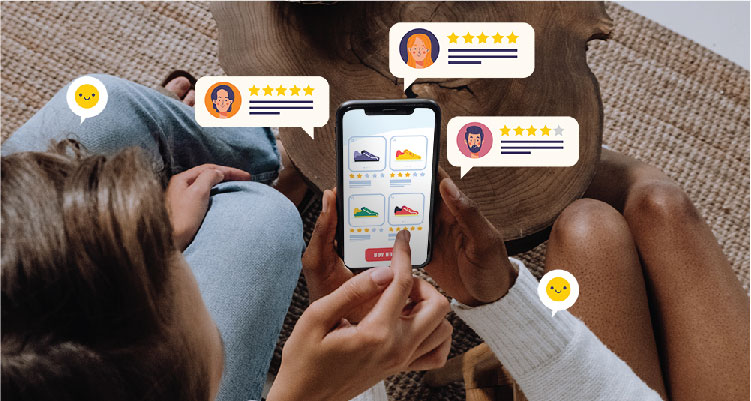 Image source: Unsplash
Read also: The Art of Understanding Consumers: Why Customer Psychographics are Important for Business Success?
Seeing Pattern is the Key
Assessing consumer behavior is actually a fairly easy task, however, it requires one absolute condition: accuracy. Doers only need to see the pattern of each transaction made by customers This habit is definitely influenced by certain reasons related to the values, interests, needs, and consumers’ lifestyle. In customer psychography, consumer behavior can be divided into 5 different types. These are the simple profiles that you can learn from each type of consumer:
1. Price-oriented Minimalist
Orientation: Promos/discounts, vouchers, free shipping, product bundling
Profile:
- Always looking for a balance between the paid price and the obtained value.
- Likes to try new products.
- Using the logic of calculating for each transaction.
- The price-oriented customers’ type will usually ask the price the first time they interact with Brand Doers.
- Comparing prices with the competitors.
2. Security-oriented Individualist
Orientation: FAQs, consultations, forms, brochures
Profile:
- Always pay attention to data security.
- Always curious.
- Prioritize consumers’ privacy.
- Ask a lot of questions frequently when interacting with Brand Doers.
- Ask about the advantages of a product.
3. Demanding-support Seeker
Orientation: Reviews, comments, ratings, forums, YouTube, influencers
Profile:
- Always look for information from peer groups.
- Consider reviews, rates, and comments from other customers.
- Look for testimonials from previous customers.
- Quite passive in interacting directly with Brand Doers.
- Likes to do some stalking to see rates, reviews, and comments.
4. Informed Optimizer
Orientation: Reviews, consultations, detailed information, labels
Profile:
- Always do comprehensive research before deciding to make a transaction.
- Always curious.
- Equip oneself with in-depth knowledge for the targeted product.
- Not easily satisfied.
- Service-oriented. Paying close attention to the services provided.
5. Loyal-quality Seeker
Orientation: Services, products, new products, innovation
Profile:
- Prioritize quality over price.
- Not easily changing products.
- Have a trusted brand.
- Inquiring about the product quality.
- Couldn’t care less about the price.
- Paying close attention to the small details such as gestures and the way Brand Doers communicate.
By looking at consumer orientation, Doers can make the selection of which type of consumers are currently dominating the market. Doers can also evaluate what kind of activities consumers are most interested in. By looking at the most frequent activities, Doers can determine the type of consumer from the brand that Doers own.
How to Obtain Psychographic Data?
Data is everything. In this disruption era, data plays an essential role in business continuity. Decision-making needs to be made based on data so that it will have a strong foundation. But, what is exactly data mean? In the context of business, data can also mean all interactions that occur between Doers as business owners with consumers. Doers can obtain data by following these 3 methods:
1. Survey
The most common way to find out customer psychographic data is by conducting a survey. Surveys can be conducted offline or online. Nowadays, there have been many online applications which easier to use for Doers in conducting a survey. Tip: If Doers want to conduct a survey, use closed questions in order to obtain more focused information.
For example: Surveys via Instagram features, namely ‘Ask Me Question’, ‘Quiz’, or ‘Polling’. Surveys do not always need to be conducted through questionnaires distribution. Doers can use social media features to make small surveys.
2. Interview
The interview method can be quite effective for consumers who have used products from Doers’ brand. Tip: If Doers’ brand is a new brand, one can conduct an interview with market groups that match the Doers’ target market.
For example: Interviews can also be conducted through the pro-active methods, for instance, for Doers who manage F&B business, one can ask questions related to the food quality that has been served or ask for criticism and feedbacks during payment transactions with customers.
3. Customer Service
Customer Service is a division that will interact directly with customers. They receive different types of questions daily and this is invaluable data. To maximize CS roles, Doers can prepare forms to record every incoming question.
For example: Doers can ask for feedback from every consumer who contacts CS. Equip CS employees with social listening skills, because the purpose of this data collection method is to have sensitivity to identify customers’ needs.
How to Categorize Customers?
Once the data is collected, the next step is reading and data analysis. The most essential task at this stage is to find patterns among customers’ data. How to do it? We have a special method at basicludo to categorize customers based on psychographic aspects. For the record, this method can be applied to Doers who use the data collection method via CS.
1. Pay Attention to the First Question
The first question determines customers’ character. Therefore, Doers need to teach Customer Service (CS) or Doers employees who will communicate directly with consumers. Ask them to pay attention to the first question asked by consumers. For example, if Doers own a fashion brand, would potential buyers have been asking CS related to the prices for the first question? Or is it about product quality? The first question always addresses customers’ needs.
2. Who is the Majority of Customers?
After having a close look at the first question, try to look at it from a wider perspective and notice the patterns that emerge. Pay attention to what questions customers ask the most. Therefore, Doers may need to limit the time when collecting data. From that period of time, try to pay attention to what questions arise most often. The majority of frequently asked questions are hints that will provide information regarding the type of consumers from the Doers’ brand.
3. Find Out Strategies
Do you already know what is the type of Doers’ consumers? There is still another step that needs to be executed. Doers also need to find out the strategies that are frequently used by brands according to their type of consumers. Each type in customer psychographic has a different approach strategy. Doers need to do some research to find out the strategy that often used by competitor brands to meet the market needs with characters A, B, C, D, and E.
4. Make an Evaluation
Do Doers have used the right strategy that matches certain types of consumer psychographics? This question could lead to making an evaluation regarding the strategies that have been implemented so far. From this evaluation, Doers can see which ones need to be upgraded, eliminated and whether the existing strategy needs to be changed or maintained.
One thing to emphasize, it is important to let go of stereotypes when finding out the type of consumer psychographic. Because one consumer can fall into various types of psychographic depending on their beliefs, values, and perceptions in seeing the brand.
As an interdisciplinary creative house at basicludo, data is our main foundation to do everything. Contact us if you want to know more about how to use data as a renewable resource for business and brand management.